Most artists treat release day as an administrative event. The record goes up at midnight, the campaign takes over, and the performing starts later.
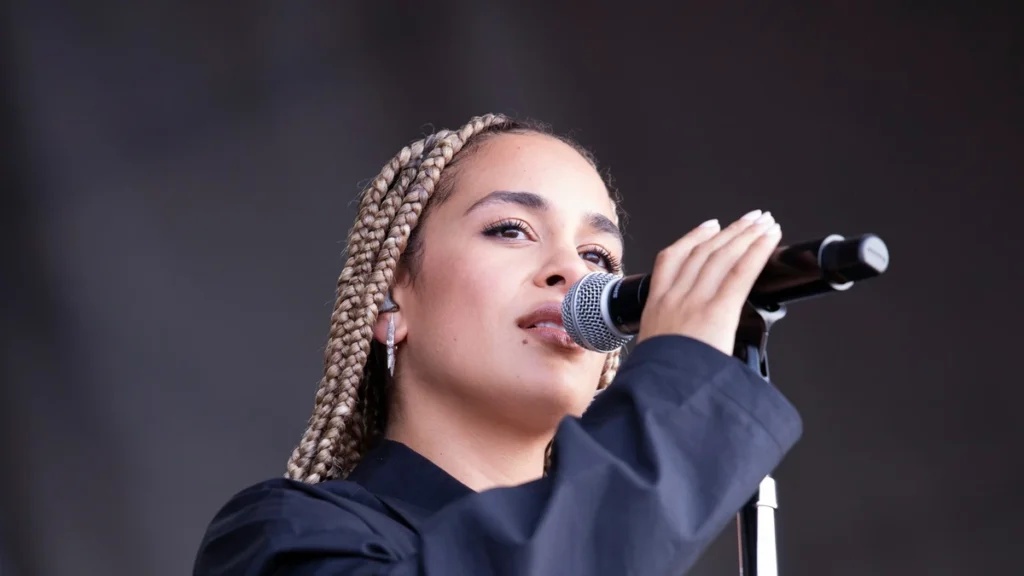
Jorja Smith put her third album out on 21 August and was on a stage in east London the same evening, co-headlining a Victoria Park bill with Tems.
Twelve Tracks, Two Guests, One Producer
What Are the Odds came out through FAMM, the label she has built her recent work around. It carries twelve tracks, and only two of them have a feature.
Restraint like that is worth registering. A contemporary R&B album at this level usually arrives loaded with guests, because each one imports an audience and a playlist route. Two features across twelve songs means most of the record has to work on her voice alone.
One of the two is the grime artist Devlin, which is not a name a streaming strategist would suggest for a singer of Smith’s profile. The other came out of the same London sessions that shaped the album.
The Record Grew Out of Sessions, Not a Plan
Announcing the album to Billboard in July, Smith described a process with very little architecture to it. “This album came together really naturally,” she said. “There was never a big plan; it was just me making music that felt right in the moment.”
The shaping influence was her producer. Working with P2J, she said, the pair began experimenting with sounds pulled from grime, funky house and Afro house, and the record grew outward from there.
That is a notable set of reference points for a singer whose reputation rests on a slower, jazz-adjacent kind of R&B. Funky house and Afro house are rhythm-led forms built for rooms rather than headphones, and building an album on them changes what the vocal has to do — it has to sit on top of momentum rather than create it.
Nine Years From Walsall to a Third Album
Smith was born in Walsall in June 1997, to a Jamaican father and an English mother, and started piano at eight at her father’s encouragement. She wrote her first song at eleven, and grew up listening to reggae, punk, hip-hop and R&B — a spread that explains why her records have never sat comfortably in one genre box.
The rise was fast once it started. She opened for Bruno Mars on a world tour in late 2017, released “Let Me Down” with Stormzy in January 2018, and put out her debut album Lost & Found that year to strong reviews and a number three placing on the UK chart.
The recognition followed immediately: the Brit Critics’ Choice Award in 2018, then Best British Female Artist at the Brits in 2019 alongside a Grammy nomination for Best New Artist. Few British singers of her generation collected that much that quickly.
What came next was slower and less conventional. The EP Be Right Back arrived in May 2021, and a second album, Falling or Flying, in 2023, which she toured through 2024 and into 2025. Five years between a celebrated debut and a second album is a long gap by the standards of an artist handed that much early momentum.
Uplifting Music, Unhappy Lyrics
Smith was direct about the tension she was after. “The music feels uplifting, but the lyrics can be a bit sad at times,” she told Billboard. “They’re about growing up, love, loss, friendships and figuring things out as I go.”
Pairing bright, danceable production with lyrics about loss is one of the oldest tricks in British dance music, and one of the few that reliably survives repetition. It gives a record two lives: one on a speaker at a party, another on headphones afterwards, and they do not have to agree with each other.
Her own summary of the approach was a sentence about trust rather than craft. She said she followed her instincts on this one, and thought it was audible across the record.
Releasing and Performing on the Same Day
The festival slot is the part that changes the shape of the campaign. Playing a major London stage on release night means the first live airing of the material happens while the album is hours old, in front of an audience that has mostly not heard it yet.
There is a risk in that. New songs land badly with crowds who do not know them, which is why most acts wait weeks before working fresh material into a set.
The compensation is that it collapses two moments into one. Instead of a release day spent posting links, the record arrives attached to an actual event, and co-headlining with Tems put two of the most prominent voices in British and West African music on the same bill on the same night.
A Year of Appearing in Unexpected Places
The album lands at the end of an unusually varied stretch. In April, Smith was the musical guest on the first season of Saturday Night Live UK — a debut season, so a slot with no established form to fall back on.
She also revisited her own catalogue, working with Mobb Deep’s Havoc on a remix of “Blue Lights”, the song that introduced most listeners to her. Handing an early signature track to a producer from a completely different tradition is a confident move, and a quietly effective way of keeping old material in circulation.
Between the television slot, the remix and a festival co-headline, the pattern is of an artist widening her range of contexts rather than consolidating one. Our piece on gospel’s grip on R&B vocal technique covers the tradition her singing draws from.
The label arrangement underpins a lot of it. Smith releases through FAMM, alongside a publishing relationship with Sony/ATV, which is the sort of structure that lets an artist take five years between albums and then put one out on a day of her choosing without a marketing department objecting.
It also explains how a record can carry a grime feature and an Afro house rhythm section without either being softened into something more obviously radio-shaped. Nobody in that chain needed the album to resemble the last one.
Why the Small Feature Count Matters
Third albums are usually where an artist either broadens or entrenches. The broadening version brings in collaborators and chases new formats; the entrenching version narrows to what already works.
What Are the Odds does something slightly awkward and more interesting: it broadens the production while narrowing the cast. The sounds are wider than anything she has made before, and there are fewer voices on it than on almost any comparable release.
The precedent is on her side. Lost & Found reached number three without a guest-heavy tracklist, and the awards that followed were for singing rather than for placements. An artist whose reputation was built on a voice has less to lose by leaving most of a record to it.
Whether that reads as confidence or as a missed commercial opportunity will depend on how the record settles. What is clear is that it was not assembled by committee, and that she was willing to sing it in public the day it appeared.
What Are the Odds is out now on FAMM.
About The Author




More Stories
Kirk Franklin Takes the Record Behind Dey Know to Church
The Line From Port Harcourt to Holy Ghost, Where D.A BIZ Sets a Prayer to Afrobeat
Why Eyes Closed by STARNAMEDSUN Still Matters to the Lineage of Dark R&B