
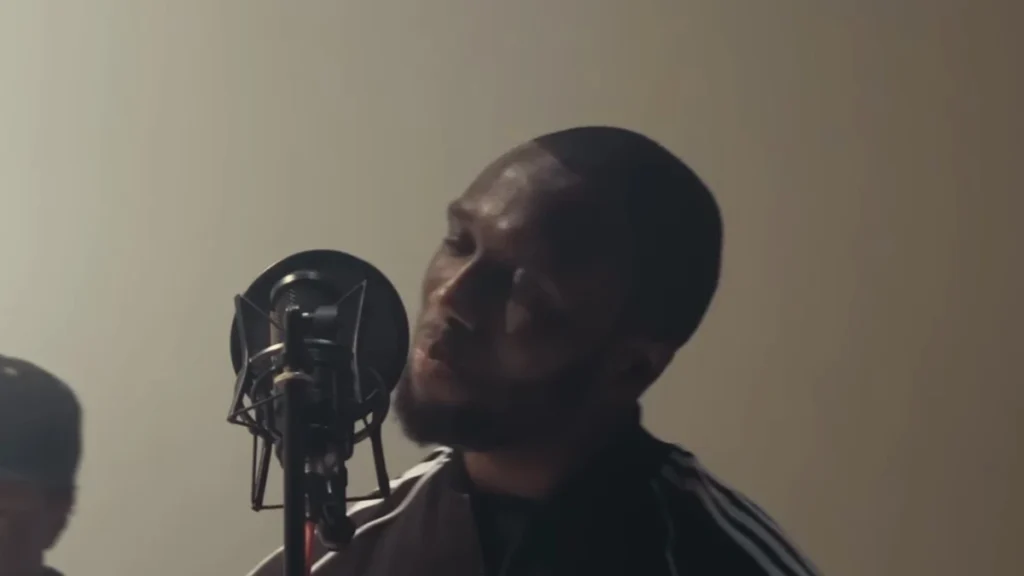
Most rappers show you the finished thing. Earlier this year Headie One opened his studio doors instead, and let people watch the part that normally stays private.
The sessions had a name — Monday Music Marathon — and the ten tracks they produced arrived on 28 August as MMM.
The Process Became the Product
Naming a record after the sessions that made it is a small decision with a large implication. It says the method is the point, and that the tape is a document of a way of working rather than a curated statement assembled over years.
That is a genuine risk for an artist at his level. Showing the room means showing the takes that did not work, the ideas abandoned halfway, and the ordinary slowness of making something. The mythology of rap production usually runs the other way — the beat arrives, the verse arrives, everyone nods.
What the streams offered instead was alacrity: a rapper working fast, in public, with the results audible a few months later. The phrase that anchors it turns up on the recent single “Turns To A Target” — “it’s Marathon Music” — which folds the sessions, the title and the record’s self-description into one line.
There is precedent for the idea in rap, though usually after the fact rather than live. Studio footage has been a staple of documentaries and DVD extras for thirty years; what changes when it is streamed as it happens is that the artist gives up the edit. Nobody gets to decide later which parts of the session looked good.
Ten Tracks Is a Deliberate Size
MMM runs to ten tracks, which for a mixtape built from open sessions is restraint rather than thinness. A marathon of studio time could easily have produced thirty.
Editing that down to ten means somebody made choices after the cameras stopped, which is the part the format tends to obscure. The openness applies to how the music was made; the selection was still private.
It is also his first full project since The Last One in 2024 — a two-year gap that the sessions themselves partly filled in public, so the mixtape does not arrive from silence the way a conventional release would.
Eight Years From an Underground Hit
Irving Ampofo Adjei has been building toward this kind of latitude for most of a decade. His second solo mixtape, The One, arrived in 2018 carrying “Know Better” with RV — a track that became an underground hit and did a lot to establish him.
The distance between that and a project named after publicly streamed studio sessions is the distance between proving you belong and being secure enough to show your workings. An artist still establishing himself has every reason to keep the process hidden, because the process is where the doubt is visible.
A Guest List Pulling Away From Drill
The features are the clearest signal of intent. Nemzzz, the Manchester rapper, is the closest to home. Luciano appears. And Sampha, a Mercury Prize-winning songwriter, is a considerable distance from anything drill-adjacent.
Sampha’s presence is the one that reframes the record. His work is built on restraint, piano and a voice that thins out rather than pushes — the opposite of drill’s rhythmic pressure. Putting him on a Headie One project is not a crossover play so much as an argument that the two things can share a room.
The scale of that reach is worth stating. Sampha Lahai Sisay, from Morden in south London, released Process in 2017 and won the Mercury Prize with it, then followed it with Lahai in 2023. His session work runs through much of the last decade of British and American pop, and he is selective about whose records he appears on.
Clash’s account has Headie One moving his drill-rooted sound in different directions across the tape, and the guest list is the evidence for that before a note is played.
Nemzzz pulls in the other direction, and usefully. A Manchester rapper on a project by one of London’s defining drill voices is a small corrective to how centralised UK rap coverage tends to be, and it puts two regional accents on the same record without either being framed as a guest spot for novelty.
Why Open Sessions Work for This Artist
The streamed-studio format has been tried often and works rarely, because most sessions are boring to watch and most artists are protective of the unfinished.
It suits a rapper whose reputation rests on writing rather than on spectacle. If the interesting thing about you is how you put words together, then a room, a microphone and a pause while you think is not dead air — it is the actual subject.
It also builds an audience that arrives already invested. Anyone who watched a track being made has a relationship with it before release day that no marketing spend buys. Our piece on why hip-hop never homogenised covers the genre’s long habit of finding new distribution shapes before the industry does.
The Mixtape Format Is Doing Real Work Here
Calling it a mixtape rather than an album matters. A mixtape carries lower expectations of cohesion, which is exactly right for a record assembled from sessions rather than designed toward a thesis.
It gives him permission to move in several directions in ten tracks without the result reading as indecision. An album would have to reconcile Sampha and Nemzzz into one argument; a mixtape can simply place them near each other.
There is a commercial dimension too. A mixtape sets a lower bar for what counts as a success, which frees an artist to release more often and to test ideas that an album cycle would filter out. For a rapper two years from his last full project, that is the difference between shipping ten tracks now and holding them for another year while a campaign is built around them.
The distinction has been eroding for years, with mixtapes charting and albums arriving loose. Using the word deliberately, on a project this openly made, is a way of setting the terms on which it should be heard.
Ten is also a length people finish. A mixtape that runs under forty minutes gets played through rather than sampled, which matters more than it used to when most listening is a queue somebody half-watches.
What It Suggests About the Next One
The interesting question is whether the sessions were a one-off experiment or a working method he keeps.
Both are plausible. Open sessions produce material quickly and build an audience while doing it, which is a strong argument for repeating them. But the same openness makes it harder to abandon a bad idea quietly, and there is a reason most writers do their worst drafts alone.
What the sessions cannot do is manufacture the material. A marathon only produces something worth keeping if the writing is already there, and the streams are evidence of pace rather than of quality. The ten tracks have to carry that themselves.
For now the tape is the answer he has given: ten tracks, made where people could see, from a rapper whose last full project was two years ago.
If the sessions return next Monday, the method has an answer of its own.
MMM is out now.
About The Author



More Stories
Kirk Franklin Takes the Record Behind Dey Know to Church
The Line From Port Harcourt to Holy Ghost, Where D.A BIZ Sets a Prayer to Afrobeat
Why Eyes Closed by STARNAMEDSUN Still Matters to the Lineage of Dark R&B