
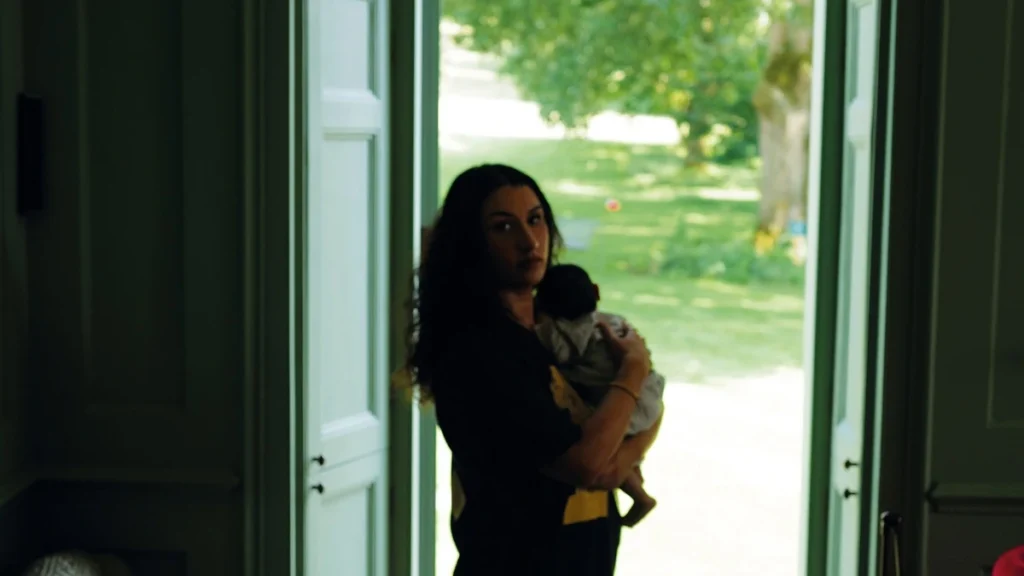
In 2011 Cleo Sol did what a young British singer is supposed to do. She signed a deal, one that ran through DaVinChe’s Dirty Canvas label and into Island Records, and released singles.
Then she stopped. From 2012 until 2017 there was nothing at all.
Five Silent Years, and Five Albums Since
She came back in March 2018 with an EP called Winter Songs, self-released. Since then the pace has been steady and entirely on her own terms: Rose in the Dark in 2020, Mother in 2021, then Heaven and Gold both in 2023.
Gentlewoman, announced on 10 August, arrived ten days later on 20 August. It is her fifth studio album, and her first since Gold.
The 2023 pair is the clearest illustration of what independence buys. Heaven came out on 15 September and Gold on 29 September — two full albums fourteen days apart. No label planning a campaign would permit that, because the second release cannibalises the first and there is no way to sell both stories at once.
There is a smaller detail worth noticing too. Mother was released on 20 August 2021, and Gentlewoman on 20 August 2026: the same date, five years on, from an artist whose records circle family and endurance.
Five years of silence followed by five albums in six years is not the shape of a stalled career restarting. It looks more like someone who stopped because the arrangement was wrong, and resumed once it was not.
Everything Since Has Been Independent
The through-line is the label. Every record since the hiatus has come out on Forever Living Originals, the independent home she shares with the producer Inflo — Dean Josiah Cover, who is also her husband.
That arrangement explains a good deal about how these albums appear. There is no long lead-in, no staggered singles campaign, no interview circuit. Gentlewoman was announced with a post on her own social accounts carrying a snippet of the music, and it was out inside a fortnight.
A major label could not run a release that way even if it wanted to, because the machinery it pays for needs months of runway to justify itself. An artist who owns the schedule can simply put the record out when it is finished.
One Producer, Every Record
The consistency has a name attached. Inflo produced Rose in the Dark, a thirty-eight-minute record that set the template: unhurried tempos, live-sounding arrangements, and a vocal mixed close enough that the phrasing carries the song rather than the arrangement.
Keeping one producer across a whole catalogue is rare now, and it is the reason these albums sound like a continuous body of work rather than five separate attempts at a market. It also means the writing partnership is a domestic one — the pair are married, and their child was born in 2021, the year Mother came out.
That biography is not incidental to the records. Titles like Mother and Gentlewoman announce their subject, and the music has not tried to disguise it as something more commercially neutral.
The Snippet Was the Whole Campaign
What she shared was brief and unusually direct. The lyric ran: “Gentlewoman, I hear you / We are making it through / I see how hard you have worked … You’re safe to love again.”
At the end of the clip she spoke rather than sang. “I can speak life into my family because I can speak life into myself,” she said, “and God I thank you for that strength because I feel like you helped me to persevere.”
Announcing an album by talking about perseverance and family, with no single, no video and no tour dates attached, is a marketing plan that would fail a label meeting. It has worked for her four times already.
Where the Voice Came From
Cleopatra Zvezdana Nikolic was born in March 1990 and raised in Ladbroke Grove, the daughter of musicians living in Notting Hill; her mother is Serbian-Spanish and her father Jamaican. She grew up on reggae, Motown, jazz and Latin music, and has named Stevie Wonder, Erykah Badu and Jill Scott among her influences.
That mix is audible. Her records are usually filed as British soul or alternative R&B, and the categories sit awkwardly because the phrasing owes as much to jazz singing as to either.
Her first appearance on a record was in 2008, as a guest on Tinie Tempah’s “Tears”, which makes the 2012 disappearance stranger rather than less so. She had a foothold and walked away from it.
The Group Work Runs in Parallel
She is not only a solo artist. Cleo Sol is the lead vocalist of Sault, the British collective built around Inflo that has released a large body of work with almost no promotional apparatus at all, and whose album Chapter 1 came out earlier this year.
Sault is worth understanding on its own terms, because it is the more extreme version of the same idea. The group works as a largely anonymous collective, with many contributors never identified at all, mixing R&B, gospel, house and disco and putting Black-centric subject matter at the front. Its known collaborators have included Little Simz, Chronixx, Kid Sister and Jack Peñate.
An anonymous collective is the logical end point of releasing without a campaign: if there is no promotional cycle, there is no need for a face to front it. What Cleo Sol does under her own name is the same practice with the anonymity removed.
She has also appeared on other people’s records selectively rather than constantly — on Little Simz’s “Selfish” in 2019, and again on “Woman” in 2021.
Between the two projects, the pattern is consistent: a great deal of music, released quietly, by people who appear to have decided that the promotional layer is optional. Our piece on what independent Black labels actually solved covers the structures that make that possible.
Why the Model Holds
The obvious objection to releasing this way is reach: without a campaign, fewer people hear it. Her catalogue suggests the trade has been worth taking. Rose in the Dark, the 2020 debut proper, ended up on end-of-year lists at both Complex and Clash without a conventional push behind it.
It helps that the audience she built is one that goes looking. A listener who found Rose in the Dark during 2020 did so largely through recommendation rather than advertising, and an audience acquired that way tends to check an artist’s page rather than wait to be told. That is the quiet asset behind a ten-day announcement window.
The other advantage is less visible and probably more important. An artist who does not need to justify a marketing spend does not need to make a record that fits one, which is how two albums can arrive in the same year, or how a five-year gap can pass without anyone demanding an explanation.
Gentlewoman is the fifth product of that arrangement, and it appeared on the same terms as the four before it: quietly, quickly, and finished.
The title track that gave the album its name is a slow piano ballad, closer to a 1960s girl group than to anything the word club suggests. That gap between what a record is called and what it sounds like has been her method for five albums now.
Gentlewoman is out now on Forever Living Originals.
About The Author





More Stories
Kirk Franklin Takes the Record Behind Dey Know to Church
The Line From Port Harcourt to Holy Ghost, Where D.A BIZ Sets a Prayer to Afrobeat
Why Eyes Closed by STARNAMEDSUN Still Matters to the Lineage of Dark R&B