Why Missoury and Doobieboy Spliff's We Friends Still Matters After a One-Take Cabin Session
An East London Session Where Alternative R&B, Pop Rap and a Single-Take Verse Met
A muted guitar pluck opens We Friends, and within seconds Missoury and Doobieboy Spliff settle into a slow 79 BPM pocket. Alternative R&B, pop rap and hip-hop share that pocket without fighting for it. Released on 30 November 2024, the song asks a familiar question: are two people still friends when something more is surfacing?
Missoury and Doobieboy Spliff sit in the playlist below, alongside the conscious and alternative hip-hop this desk keeps in rotation, and the Missoury, Doobieboy Spliff profile gathers the coverage so far. We Friends reached BlackSounds.News through PopHits.Co Music Charts, which verifies independent artists and places their releases across its network of music news desks. Hit play, then read on for the session story.


The Slow Wave Behind Missoury’s We Friends Runs From Frank Ocean to Steve Lacy and Nasty C
Nearly two years on, the record is worth hearing again. It runs for under two minutes, yet it carries a whole lineage inside it. It also shows where an independent artist from East London, on South Africa’s Eastern Cape coast, fits in that lineage.
Rap and R&B have traded hooks and verses for decades. The wave We Friends belongs to is a quieter branch of that history. It favours low tempos, clean guitar parts and vocals that sit inside the arrangement.
That branch can be traced through three reference points. First, Frank Ocean made restraint a strength on Channel Orange in 2012. His voice blends into the production instead of pushing over it. Missoury’s delivery on We Friends is built on the same idea, restrained and melodic.
Next, Steve Lacy carried that idea into guitar-led songs such as Bad Habit. There, a plucked, clean guitar does much of the emotional work. The muted pluck that opens We Friends is descended from that approach.
Closer to home, Nasty C showed South African hip-hop how to move between rap verses and sung hooks. We Friends works the same seam, with an understated pop-rap pulse under its melodies. Fittingly, the real story behind the song comes from Durban, the city where Nasty C was born.
These names are a map of the sound. They are not a claim of any connection between the artists.

We Friends Shows Where Missoury Fits Between Hip-Hop, Alternative R&B and Pop Rap
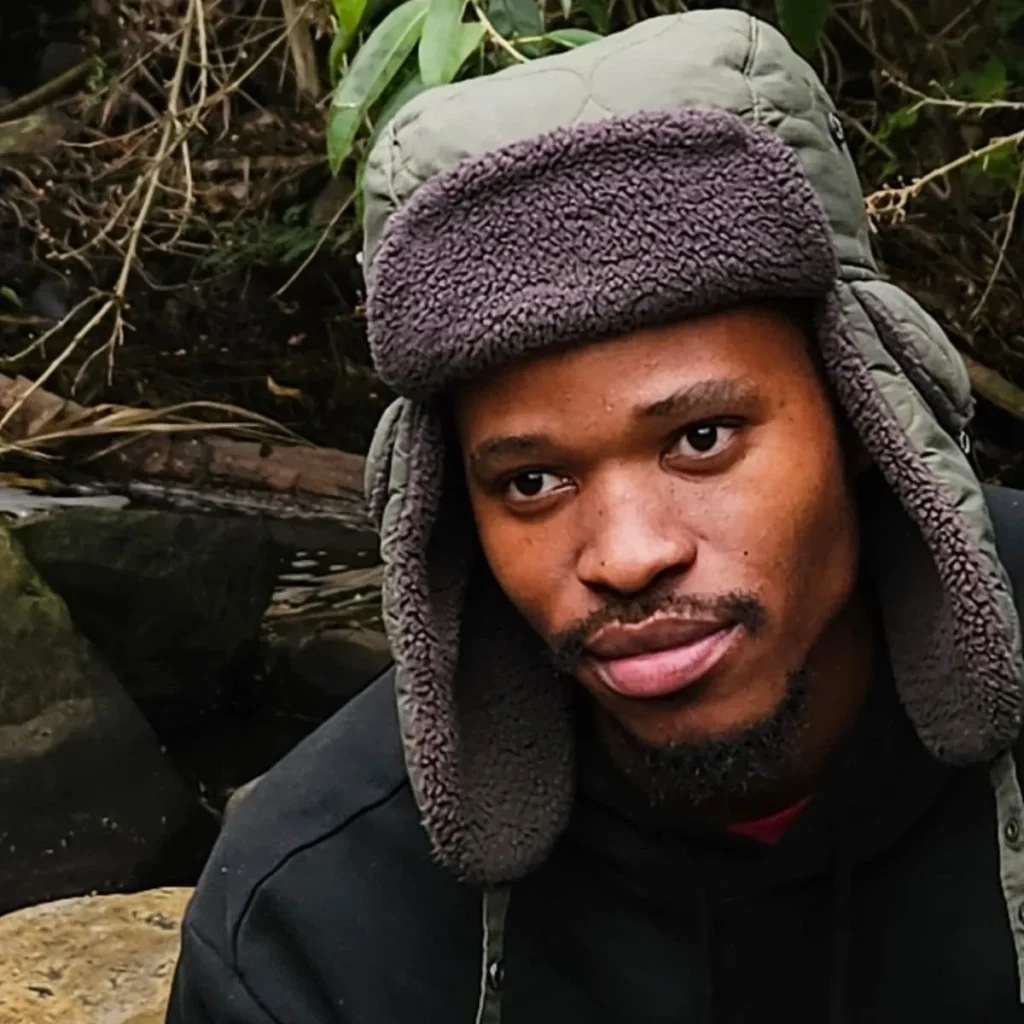
Missoury is an independent artist developing from East London. His catalogue moves between hip-hop, alternative R&B, Afro-influenced sounds, pop rap and experimental production. What holds it together is an interest in opposing feelings sitting side by side: light and dark, confidence and doubt.
We Friends is a clear early example of that duality. Its subject is the space between friendship and romance, and the arrangement mirrors it. Soft guitar tones and fluid vocal layers keep the mood warm. Meanwhile, the question at the centre of the song keeps it uneasy.


One Take in a Cabin Gave We Friends by Missoury and Doobieboy Spliff Its Lived-In Feel
The story of how the song was made explains its loose feel. According to Folded Waffle, the session took place in Morningstar’s cabin in East London, which doubles as a creative retreat. The chorus began when Morningstar improvised lyrics over an instrumental by the producer Vaudevillian.
Missoury wrote his bars in the room as the energy built. Then Doobieboy Spliff rapped his entire verse in a single take, which surprised everyone present. That spontaneity is audible. The song sounds like a conversation that had started before anyone pressed record.
The pair also presented the track as a first look at a planned joint project, titled Two Men One Brain. As a result, We Friends documents a working partnership as much as a single song.
The Acts Adjacent to We Friends, From Doobieboy Spliff to the Outlets That Covered Missoury
Doobieboy Spliff is the most important adjacent act here. His verse brings a grounded realism that keeps the song from drifting too far into fantasy. Without it, the record would be a private reflection rather than an exchange between two people.
Missoury’s wider catalogue shows how much he values that kind of exchange. On Spotify, his most-played songs include collaborations with dawnofthestar on DUALiTY and SNOW ANGELS [FREESTYLE]. Others pair him with DYNAMIC031 and Ovi Yay on Lost Lover, and with OfficialTBG on Turn It Up. He works best in company, and We Friends is one of the clearest examples.
The song has also found a home in independent music press. Folded Waffle reviewed it in February 2025 and filed it among its playlists and reviews. HypeHub Magazine followed in March 2025, describing it as a raw snapshot of a friendship in motion.
The duality theme has stayed with him. In October 2026, a visualiser titled DUALiTY (Part 1) appeared on his YouTube channel. That suggests the ideas in We Friends are still shaping the work that followed.
BlackSounds.News’s curator team: “We Friends works because of the hand-off between two voices. Missoury’s melody stays low and patient, Doobieboy Spliff answers in plain speech, and a private question becomes a shared one.”
For listeners who come to R&B for the mood and to hip-hop for the honesty, We Friends is an easy place to start with Missoury. Give it two plays, because the second one is where the details land.
Stream We Friends in the player above, then follow Missoury on Spotify, Audiomack, Tidal, Instagram, TikTok, YouTube, Facebook and X. Every link is also collected on his Linktree.








About The Author




More Stories
The Line From the Talk Box to AI Vocals: THE SKY FELL DOWN by GsKan
Belz: How Yacht-Rock Harmonies Built the Situationship Pop of Make Up Your Mind
Rafa de la Santa and G_Rebel Draw the Line From Santa Clara to Jazz-Tinted Hip-Hop on Tierra