
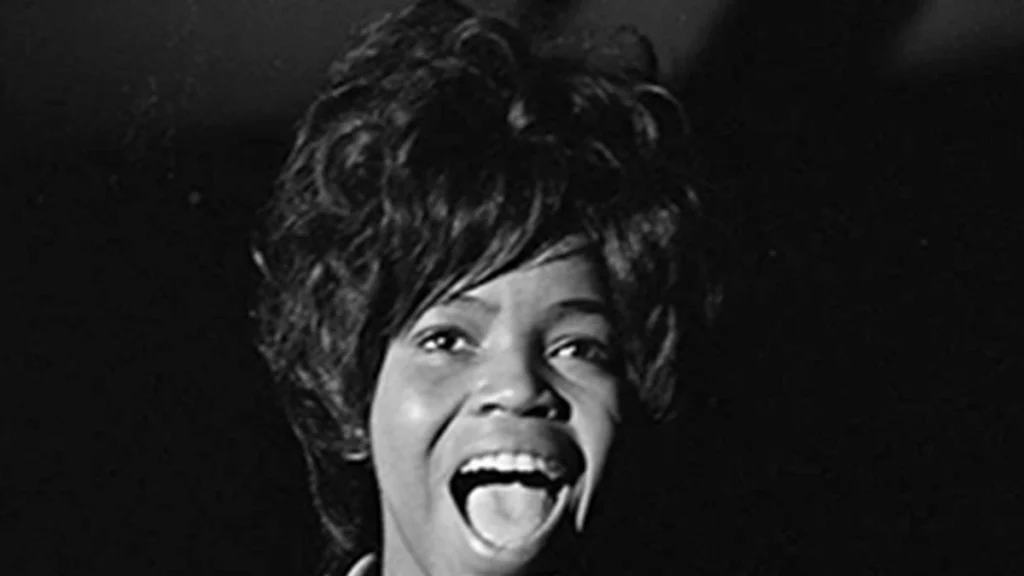
P.P. Arnold on the Dutch television programme Fenklup, February 1968.
P.P. Arnold on the Dutch television programme Fenklup, February 1968.
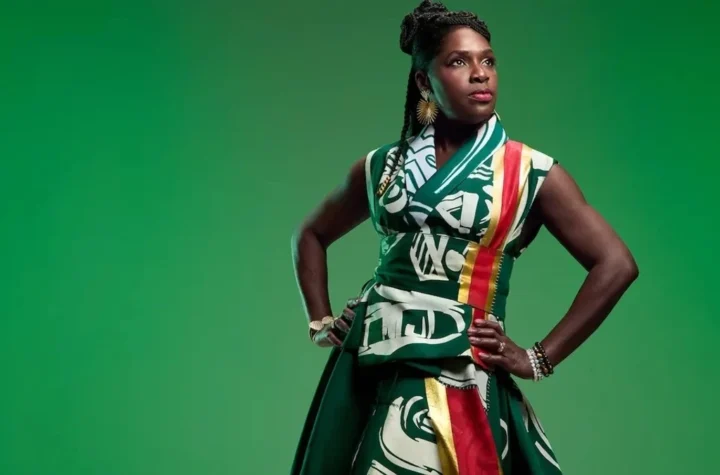
P.P. Arnold has been making records for sixty years. Until this year, nobody had ever assembled a collection of them.
Soul Survivor – A Life In Song is described by Demon Music Group, without much attempt to soften it, as “the very first (and long overdue) career-spanning retrospective” of her work.
A Northern Soul Set at Blackpool
The live occasion attached to it is specific. Arnold headlines the Blackpool International Soul Festival at the Winter Gardens Ballroom on Saturday 20 June, and what she is playing is not a greatest-hits set.
It is billed as “a very special, Northern Soul set” marking her sixtieth anniversary as a solo performer, paying tribute to the UK northern soul scene alongside “The First Cut Is The Deepest” and “Angel Of The Morning”.
The detail that should interest anybody who follows the scene is the last line of her own announcement: “She’ll be performing many songs that have never been performed anywhere.”
A singer with a sixty-year catalogue saying that means there is material sitting in it that has never been played to a room. On a northern soul weekender — a scene built entirely on records the industry overlooked — that is close to the ideal booking.
Fifty-Seven Songs, Compiled by Her
The collection runs to 57 songs across three CDs, or 25 across a double LP. She compiled it herself, which explains some of the choices.
Alongside the singles and album tracks there are previously unreleased recordings, demo versions, live performances and rare mixes being reissued for the first time. The sleeve is by the photographer Gered Mankowitz, a close friend, with new notes by the author Jude Rogers.
Reading the track list is its own kind of career summary. “Will You Love Me Tomorrow” with Andy Gibb. “Belle The Sleeping Car” from the original cast of Starlight Express. “Burn It Up” with the Beatmasters. “Perfect Sense Part 1” with Roger Waters. “It’s A Beautiful Thing” with Ocean Colour Scene. A demo of “I’m Only Dreaming” with Steve Cradock.
Those are five different decades and at least four different industries. It is also, precisely, why no retrospective existed: a body of work scattered across that many labels and credits is an administrative problem before it is a musical one.
Featured credits are the hardest part of that problem. A song released under somebody else’s name, with Arnold billed after the “with”, sits in that artist’s catalogue and is licensed by their label — so assembling them into one collection means negotiating with a dozen rights holders who have no particular reason to say yes. Careers built on session work and guest vocals routinely go uncollected for exactly this reason, and the people who lose most from it are almost always the singers rather than the acts they sang for.
The Immediate Years
The through line starts at Andrew Loog Oldham’s Immediate label, where, in Oldham’s own phrase, she “became one of us”.
What followed is a list that reads like a survey of British popular music: the Small Faces, Cat Stevens, Mick Jagger, Barry Gibb, Eric Clapton, Andrew Lloyd Webber, the Blockheads’ Chaz Jankel, Roger Waters, Ocean Colour Scene, the Blow Monkeys’ Dr. Robert, Paul Weller.
Her own framing of the live show is that the songs come “interspersed with stories from an extraordinary six decades working in music” with Ike and Tina Turner, the Rolling Stones, the Small Faces, Eric Clapton, Primal Scream, Paul Weller, Oasis and Cast.
An American singer who arrived in Britain in the sixties and stayed occupies an unusual position in this music. She is a soul singer by training and a fixture of British rock by career, which is exactly the overlap the northern soul scene has always lived in.
What the Memoir Contains
The album is a companion to her 2022 autobiography, also called Soul Survivor, which Mojo called “a jaw-dropping memoir”.
Blues & Soul‘s review makes clear it is not a victory lap. It runs from school in the early sixties to her 2019 album The Adventures Of…P.P. Arnold, and covers teenage pregnancy, the fear of a shotgun wedding, chart success, and acclaim acting in the West End.
It is unsparing about the touring. The review describes “page-turning forensic accounts of arduous touring with Tina and unpredictable Ike Turner, with threat and danger never being far away” during her time as an Ikette.
There are also detailed accounts of racial struggle and misogyny in both her private and working life, a chequered relationship with drugs, and the losses — divorce, deaths — that come with sixty years of anything.
The cast list the reviewer reels off at the end is its own argument for why the book landed: the Small Faces and especially Steve Marriott, the Bee Gees, Madeline Bell, Doris Troy, David Bowie, Alexis Korner, Jimi Hendrix, Rod Stewart, Marianne Faithfull, the Rolling Stones and particularly Mick Jagger. Arnold was in the room for a very large amount of British music history, usually without being the person the photograph was taken of.
Why This Is a Northern Soul Story
Arnold’s records are not northern soul in the strict collector’s sense — she was a chart artist on a London label, not an obscure American 45 that reached Wigan by accident.
But the scene’s affection for her is long-standing, and her own site describes her as a “Northern soul diva” alongside “London’s First Lady of Soul”. The overlap is a matter of repertoire and voice rather than provenance.
The Blackpool booking makes the connection explicit in a way a nostalgia set would not. Playing a northern soul set, at a Blackpool ballroom, in the room where that scene has held its weekenders for decades, is a performer acknowledging an audience that adopted her rather than the other way round.
It sits alongside what the rest of the scene is doing this year — a ten-piece band fronted by a twenty-four-year-old playing the Casino repertoire — with the original singers still available to do it themselves.
Into a Seventh Decade
Demon’s description of her career is that her “records and performances are now in their seventh decade”. That is not a figure of speech; the first ones were made in the mid-sixties.
She is not treating that as an endpoint. Last year she played the Edinburgh Festival, she is returning to Scotland in September, and in 2025 she toured Japan for the first time, backed by Japanese soul musicians, on a run of dates billed under the same Soul Survivor name.
A first performance in Japan, six decades in, is the kind of detail that says more about the shape of this career than any chart position. The audience kept arriving; the infrastructure to serve it simply took a very long time to catch up. That Japanese run also followed the pattern of everything else here — local musicians assembled to back her, an audience of mods and soul fans who had known the records for years, and a singer arriving in person for the first time.
What the retrospective does, finally, is put the evidence in one place. Fifty-seven tracks is not a summary of a career like this so much as the first attempt anyone has made at one.
About The Author

More Stories
Kirk Franklin Doubts the Fans Who Asked for Old Kirk
Ian Roland Plays a Twelve-String, and the Line Runs Back to Lead Belly
Giuseppe Cucè 21 Grammi and the Line From the Gospel Hammond to Catania